
TECHNOLOGY
PRECISION EXTRACTION, BUILT AROUND A CONTAINED CUT.
THE CHALLENGE
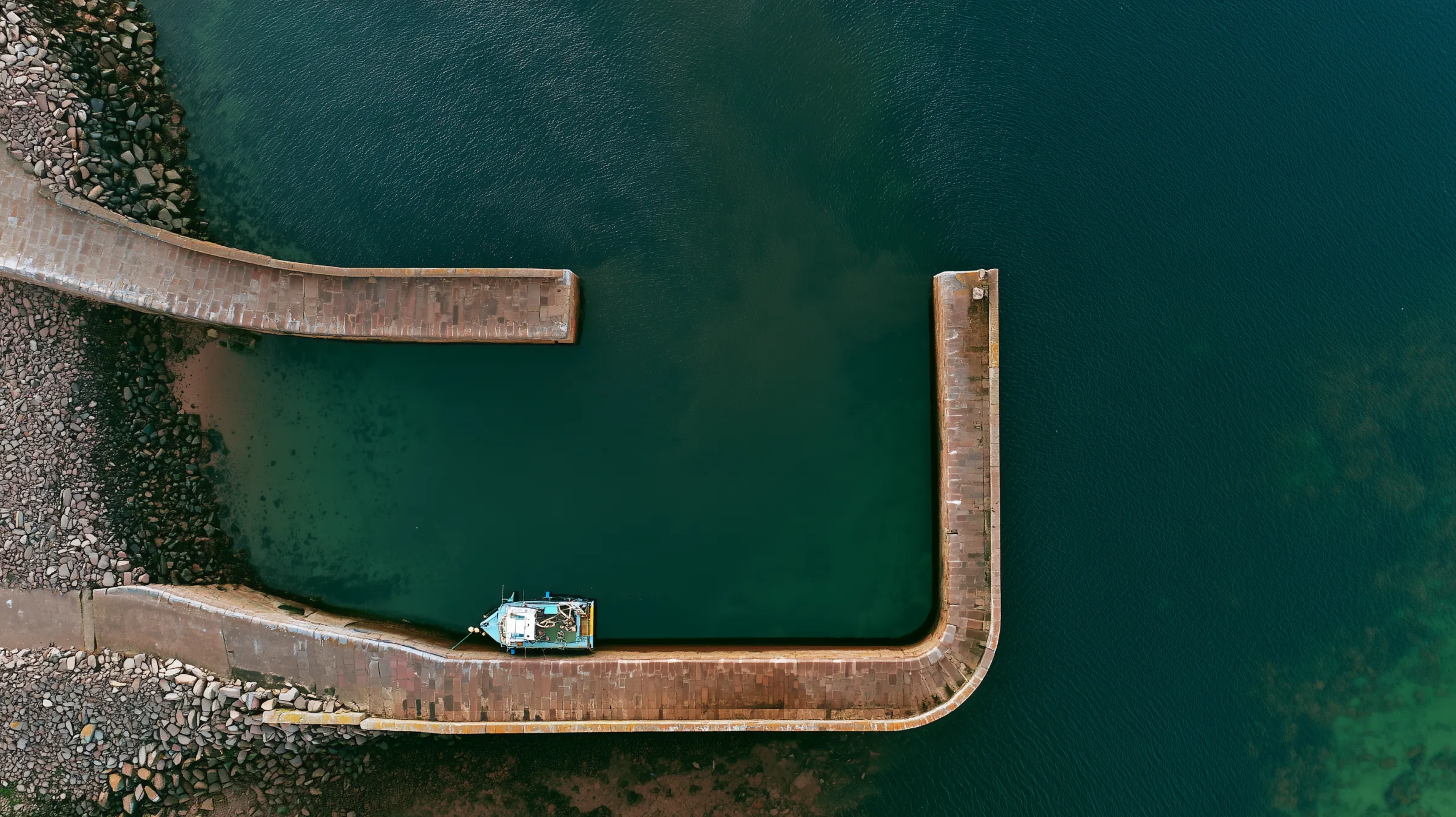
Conventional dredging can be difficult to deploy where access, depth or environmental sensitivity constrain the site.
Large dredgers and heavy shoreline equipment are not always practical in shallow water, narrow channels, remote locations or sensitive environments.
Estenna addresses those constraints with a smaller configurable system focused on selective cutting, screening and pumped transfer — contracted as dredging services alone, or as recovery to value end to end.
A modular system configured for the material and site.


A shrouded cutter head loosens sediment inside a controlled extraction zone.

The sediment-water mixture is screened and pumped through a pipeline to an agreed discharge point — or, on longer transfers, into a barge for onward pumping to the processing plant.

Platform, positioning and processing equipment are selected around access, depth, material and recovery goals.

IN DETAIL 01 — SELECTIVE EXTRACTION
Contained cutting at the sediment face.
The cutterhead works within a shroud to focus disturbance on the target sediment. Its position is held to approximately ±5 cm where Real-Time Kinematic (RTK) GNSS corrections are available — accuracy degrades without them, and local currents and wind also influence it. That precision is what lets the head work safely alongside structures and services whose positions are already known. It produces a flat-bottomed cut, even adjacent to a harbour wall, and can form a flat-bottomed channel with tapered sides. Where the target material is buried, the material above it is removed first.

IN DETAIL 02 — PUMPED TRANSFER
Controlled transfer from water to shore.
Pumping and screening move recoverable material through a defined route for discharge or further treatment. Manoeuvring a vessel with an exceptionally long floating pipe becomes difficult, so beyond a certain distance it is more effective to pump material into a barge, then from the barge to the processing plant.

IN DETAIL 03 — SUPPORT PACKAGE
A support package matched to the project.
Positioning, platform and optional processing modules are configured after site assessment. A deployed unit ships as standard freight in 40-foot ISO containers, with its own workshop and spare cutter head travelling alongside it, and reaches full operation in around three days from arrival on site. The hydraulic-arm arrangement is approximately 15 tonnes lighter than the conventional equipment it replaces, which is why a standard excavator or telehandler can do work that would otherwise require cranes and a heavy-lift vessel.
